Conventionally, the condition is treated with antifungal medication. However, due to the increasing number of infections and rising concerns over antifungal resistance, it seems prudent to consider alternative approaches1,2 .
I have been looking at available scientific research into the use of probiotics as a component of an oral thrush clearing protocol and have summarised the symptoms and findings below.
Within this article:
What are the symptoms of oral thrush?
How can probiotics help with oral thrush?

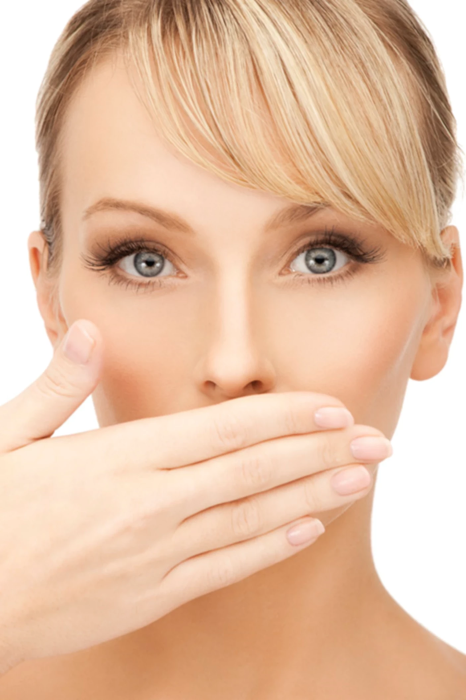
Oral thrush can cause bad breath, or an unpleasant taste in the mouth
What are the symptoms of oral thrush?
The symptoms of oral thrush are easy to recognise, as the yeast gives rise to a thick white coating on the tongue and/or white spots on the inside of the cheeks. Sufferers may also see areas of inflammation in the mouth, develop red cracks at the corners of the mouth, notice an unpleasant taste in the mouth or experience odorous breath3.
Although Candida species are common and often harmless residents of the oral microbiota, symptoms often arise after the homeostasis of the oral ecosystem or immune defences have been disturbed, allowing the fungus to proliferate and become pathogenic1. Factors that can contribute to oral dysbiosis, such as antibiotic use and wearing dentures, have been associated with Candida overgrowth. Immunocompromised individuals are the most susceptible to the fungal infection, including older people and those using local immunosuppressant drugs such as oral steroid inhalers1.
Additionally, other lifestyle factors, such as a poor diet - especially one high in sugars and refined carbohydrates, smoking, stress and inadequate dental hygiene, can contribute to the development of oral thrush3 .
How can probiotics help with oral thrush?
Unlike antifungals and antibiotics, which can indiscriminately alter the balance of the oral microbiome by reducing both good and bad microbes, probiotics exert their effects by increasing the levels of beneficial microbes within the oral cavity and reducing opportunities for pathogens to colonise4 .
In vitro research in this area has shown that strains of probiotic bacteria exert various antifungal effects, which supports the mechanism of their use. For example, the well-researched probiotic strain, Lactobacillus rhamnosus GG, can exhibit protective effects against C. albicans and prevent epithelial tissue penetration5,6.
When looking at the clinical research on the use of probiotics to reduce oral Candida colonisation, overall, the effect seems to be positive, with one recent meta-analysis showing a 41% lower rate of oral Candida spp. colonization in probiotic treatment groups compared with controls1. However, due to the high heterogeneity of the study populations and probiotic strains used in clinical studies, it is currently difficult to draw a firm conclusion.
Despite variation in the research, probiotic combinations have shown strong and consistent results in lowering Candida counts in the elderly population4 .
A 2007 study7 published in the ‘Journal of Dental Research’ gave 276 elderly people either 50g of probiotic cheese, containing Lactobacillus rhamnosus GG, L. rhamnosus LC705, and Propionibacterium freudenreichii ssp. shermanii JS, or 50g of regular ‘control’ cheese every day for 16 weeks. Their saliva samples were analysed at the beginning and end of the trial, and total yeast cell counts were noted. The trial showed that participants in the probiotic group had significantly lower yeast cell counts at the end of the study period. In fact, probiotic intervention reduced the risk of high yeast counts by 75% and the risk of hyposalivation (low saliva levels) by 56%. The study concluded that probiotic bacteria may be ‘effective in controlling oral candidiasis’.
Another study compared candida counts in a group of 90 head-and-neck cancer patients who were at increased risk of oral thrush8. The patients were split into three treatment arms, receiving either an antifungal mouthrinse, a probiotic mouthrinse, or a combination of the two. The probiotic mouthrinse was a four-strain combination of Lactobacillus helveticus Rosell-52, Lactobacillus rhamnosus Rosell-11, Bifidobacterium longum Rosell-175 & Saccharomyces boulardii CNCM I-1079.
Although all three interventions showed a significant decrease in Candida counts (p<0.001), interestingly, the probiotic treatment outperformed the antifungal as a standalone treatment (92.5% vs 86.3% reduction). However, the combination treatment had the best effect (96% reduction), and the researchers concluded that probiotics may be a useful adjunct to contemporary care in the study population.

Oregano oil is a potent anti-fungal
Summary
More clinical research is still needed to support the use of specific probiotic strains for the treatment of oral thrush. However, preliminary studies do seem to support the use of probiotic combinations for reducing oral Candida counts, especially in the elderly population, suggesting that probiotics may be a helpful addition to oral candidiasis treatment protocols.
It makes sense to follow all other elements of a natural anti-Candida plan to achieve the best results. Eliminating sugars and refined carbohydrates is especially important, as sugar encourages the adhesion of Candida to the oral mucosa while also altering the pH of the mouth3 .
It is also important to address any overgrowth of Candida within the gastrointestinal tract, since Oral Candidiasis can indicate candidiasis further down the digestive tract9 . Taking a daily probiotic supplement alongside a special strain of probiotic yeast, could offer essential support when seeking to rebalance gut flora in this situation.